

The nonprofit sector is in the first miles of a long race, and we need to train like it
We have been thinking a lot about resilience over the past years. What it looks like, in this tough and difficult season, to keep moving forward, adapting, and fighting for what we believe despite ongoing challenges and the fatigue that comes with continuously having to react to those challenges.
Marathon runners often talk about hitting the “wall” around mile 20. You might assume that means putting their heads down, gritting their teeth, and simply pushing through to the end of that mile. However, trainers say the key to getting through mile 20 is the opposite. You need to slow down, refuel, and focus on the mental side of the mile. On top of that, the best practice for initial marathon runners is to take extensive time to train for that moment, slowly working their way up from 5 to 15 to 20 to 26.2 miles in training, so they’re ready for the challenge of mile 20 when it comes. These runners aren’t putting their head down and pushing through. They’re taking time in advance to build up strength and conditioning, training to endure a variety of conditions, and in the moment slowing down and being strategic to make it through the “wall” and endure to the finish line.
Over the last several years, nonprofit organizations have demonstrated extraordinary adaptability and strength as they have navigated the early miles of this marathon. They have responded to a pandemic, funding cuts, policy shifts, changing community needs, workforce challenges, the emergence of AI, and more all while continuing to serve their communities. We are hearing many nonprofit leaders describe challenges that sound similar to a marathon runner hitting the wall at mile 20:
- “We’re constantly reacting.”
- “Our team is exhausted.”
- “The same challenges keep resurfacing.”
- “Everything feels urgent.”
Like a marathon runner, we believe nonprofits need time to take a step back, slow down, and focus on building resilience so they can endure whatever challenges come at them through the long race ahead.
So, what does nonprofit resilience look like in practice? While runners strengthen resilience through physical training, nonprofits build it through the ongoing leadership practices, systems, and culture they put in place.
Our Strategic Resilience Framework illustrates how these elements work together to support a continuous five-step cycle that helps organizations identify and understand internal and external changes, make informed decisions, adapt in response, and seed innovation in anticipation of future changes. Together, these capabilities help organizations move from reacting to change to proactively shaping their future, allowing them to sustain and strengthen their impact in an increasingly uncertain environment.
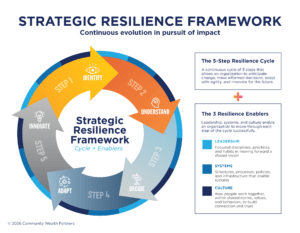
Strengthening resilience is not a single solution or a quick fix. It’s not just about securing more funding. It requires an ongoing commitment to developing the organizational capacity needed to navigate change effectively.
The race ahead is long, and the challenges nonprofits face today are real and immediate. Organizations that invest in resilience practices can develop the vision and agility to not just weather change, but to lead through it and proactively shape a stronger future for the communities they serve.
If you’re a nonprofit leader, are you experiencing some of what we’re describing? If you’re a funder, what are you hearing from your nonprofit partners? We’d welcome the opportunity to hear what’s keeping you or your grantees up at night and share what we’re learning from our work with organizations and funders. Connect with Amy Celep to continue the conversation.